
ECZEMA
📅 16th September 2026
⏱ 5 min read
The Importance of Omega-6 Fatty Acids in Eczema
If you spend time in wellness spaces online, you've probably seen the advice: seed oils are inflammatory, so cut omega-6 out completely for calmer skin. But this misses something important. Omega-6 isn't just one thing — it's a whole family of fats that behave differently from each other, and one member of that family, called GLA, tends to run low in people with eczema and actually seems to help the skin. Here's why omega-6, omega-3, and getting your levels tested properly all matter more than a blanket “avoid this” rule.
Louise Cowlishaw
BANT Registered Nutritional Therapist
The omega-6 family isn't one thing
The fat most people mean when they say “omega-6” is linoleic acid, found in sunflower, corn and soybean oil. In excess — especially compared to how much omega-3 you're getting — this can feed into inflammation in the body, which is where the bad reputation comes from.
But the body doesn't stop there. It can turn linoleic acid into other, calmer fats further down the line, including one called GLA. GLA behaves quite differently from its inflammatory cousin — it's linked to soothing, rather than fuelling, inflammation, and it also helps support the skin's own barrier, which keeps moisture in and irritants out. In eczema-prone skin, that barrier-building process doesn't always work as well as it should.
Why GLA specifically seems to matter for eczema
Several studies have found that people with eczema tend to have lower levels of GLA specifically — not because they're eating too little omega-6 overall, but because the body isn't converting it into GLA very efficiently. Cutting out omega-6 completely doesn't fix this — it just removes the raw material the body needs to make GLA in the first place. In one study, people taking evening primrose oil (a GLA-rich supplement) saw their GLA levels rise, and the more they rose, the more their eczema improved.
Why omega-3 helps too, through a different route
Omega-3, found in oily fish and, to a lesser extent, flaxseed, chia and walnuts, helps in a different way — mainly by calming an overactive immune response rather than by building the skin barrier. Studies link it to less inflammation and fewer flare triggers. One recent trial found that people taking a higher daily dose of omega-3 saw a bigger improvement in their eczema than those on a lower dose, who in turn did better than people taking no supplement at all.
Why combining the two may work better than either alone
Interestingly, omega-3 and GLA seem to work even better together than either does alone. Omega-3 appears to help the body hold onto more GLA rather than converting it further down a more inflammatory path, and calming inflammation generally seems to help the skin barrier repair itself too. In one trial, children with eczema given a combination of fish oil and a GLA-rich oil saw a meaningful improvement in symptoms and needed less steroid cream.
Getting more of both — food first, supplements where needed
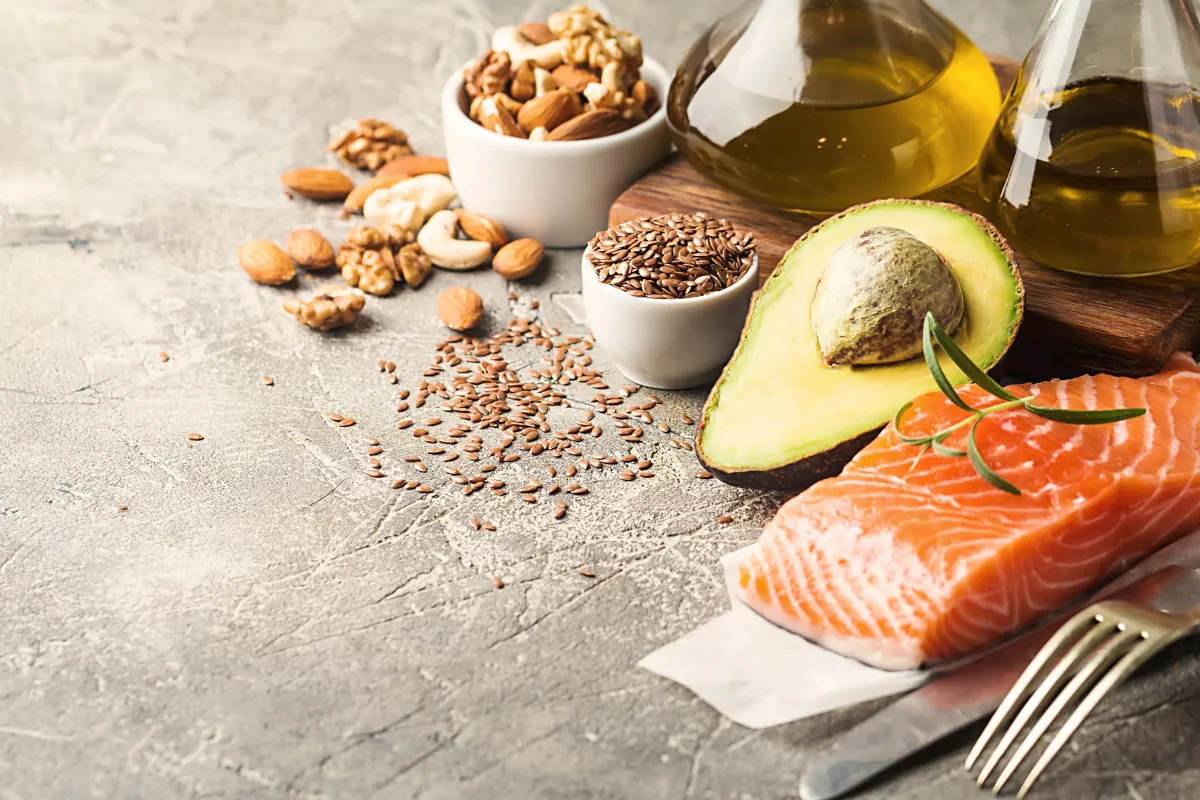
Omega-3: aim for oily fish like salmon, mackerel or sardines two to three times a week, or an algae-oil supplement if you're plant-based. Flaxseed, chia and walnuts contain a different, less easily-used type of omega-3, so treat them as a bonus rather than a replacement for fish.
GLA: genuinely hard to get enough of from food alone — most research uses supplements like evening primrose, borage, or blackcurrant seed oil. Doses used in studies vary quite a bit, and there's no single “right” amount, which is exactly why it's worth getting proper guidance rather than guessing.
The bottom line isn't “avoid seed oils” or “eat lots of seed oils” — it's making sure you're getting enough of the specific fats that seem to help (GLA and omega-3), through food where possible and a supplement where it's not.
Test before you guess — and test the right things
One thing worth knowing: a standard blood test that only gives you a “total omega-6” or “total omega-3” number can be misleading. It lumps several different fats together, so you could have a perfectly normal total while still being short on the specific ones — like GLA — that seem to matter most for eczema. A proper test that breaks down the individual fats gives a much clearer, more useful picture than a single combined number.
Genetics adds another layer
Genetics can play a role too — some people are naturally less efficient at converting omega-6 into GLA, which may explain why they benefit more from taking GLA directly rather than relying on the body to make its own. Genetic testing for this is still a fairly new area, but it can be a useful extra piece of the puzzle alongside a proper fatty acid test.
This is one piece of the bigger picture — work with a qualified nutritional therapist
Fatty acids are a genuinely helpful piece of the eczema picture, but they're not the whole picture. Vitamin D, gut health, other nutrients, stress and your skincare routine all play a part too. That's why it's worth talking to a qualified nutritional therapist or dietitian rather than self-prescribing supplements — they can help you work out whether this is relevant to you, what testing (if any) makes sense, and how it fits alongside everything else that affects your skin.
The takeaway
Omega-6 doesn't deserve the blanket fear it gets online, and omega-3 isn't the “opposite” of it. Some people with eczema are simply short on specific fats — GLA and omega-3 — even while getting plenty of fat overall, and combining the two seems to work better than focusing on just one. Rather than following a rule either way, it's worth testing your actual levels and getting guidance from a qualified practitioner to find out what's really going on for you.

Louise Cowlishaw
BANT-registered nutritional therapist specialising in eczema, acne and gut health
✓ BANT registered
Ready to take control of your skin?
Book a 20-minute discovery call to find out how nutritional therapy could help you.
Get articles like this straight to your inbox
Sign up for evidence-based insights on skin health and nutrition
More from the journal

Coming soon
How is gut health linked to eczema?
Have you heard of the gut-skin axis? With over 70% of our immune system being in the gut it is no wonder that gut-driven inflammation can directly affect your skin and this is particularly relevant in eczema where the immune system is in overdrive. Find out what steps you can make to improve your gut health...

Coming soon
Vitamin D - how much do I need?
Vitamin D is extremely important for managing eczema as it helps modulate the immune system reducing uncontrolled inflammation. It can be confusing knowing how much you need and what influences your requirements. Find out more about the importance of vitamin D and how you can check you are getting enough...

Coming soon
What are the benefits of functional stool tests?
Functional stool tests can give you a deeper dive into the health of the gut environment. They can provide indicators of inflammation or dysbiosis, digestive ability and also provide information on the bacteria living within the gut but professional stool tests are expensive so are they worth it? This article explores this in more detail.
Ready to take control of your skin?
Book a free discovery call and find out how personalised nutritional therapy could help you build lasting skin health from within.
Nourished Skin
©2025 Nourished Skin. All rights reserved.